


Last modified on:
Standard craps rules depend on the stage of play. On a Pass Line come-out roll, 7 or 11 wins, 2, 3 or 12 loses, and 4, 5, 6, 8, 9 or 10 establishes a point. Once a point is active, the Pass Line wins if that number repeats before 7.
Jump to section
Other playing options have their own conditions, so one dice total can settle different selections in different ways. This reference explains the two phases, the main playing options and the exceptions that change a result. For the broader game overview, explore our Craps Guide.
The Two Phases of Standard Craps
Craps uses the combined total of two six-sided dice. A standard Pass Line decision begins with a come-out roll and either settles immediately or continues into a point phase.
Come-Out Roll Results
The come-out roll starts a new Pass Line decision. The same opening total also determines the initial result of a Don’t Pass selection.
| Dice Total | Pass Line Result | Don’t Pass Result* |
|---|---|---|
| 7 or 11 | Win | Loss |
| 2 or 3 | Loss | Win |
| 12 | Loss | Push |
| 4, 5, 6, 8, 9 or 10 | Point established | Point established |
*The Don’t Pass column uses the common bar-12 rule. Some tables bar 2 instead: 2 is then a push and 12 wins.
A push returns the original amount without a win or loss. The word bar on a layout identifies the excluded opening total for that option.
Point-Phase Results
Once a point is established, the opening rules stop applying to that Pass Line decision. Only the point and 7 resolve it; every other total leaves it open.
| Next Roll | Pass Line Result | Don’t Pass Result |
|---|---|---|
| The active point | Win | Loss |
| 7 | Loss | Win |
| Any other total | Still unresolved | Still unresolved |
If 5 is the point, an 11 does not produce the opening Pass Line win. Likewise, 2, 3 and 12 do not produce its opening loss. They leave that decision running, although another selection on the table may resolve.
Pass Line and Don’t Pass Rules
Pass Line and Don’t Pass follow the same table point after it is established, but they favor different outcomes. Pass Line needs the point before 7; Don’t Pass needs 7 before the point.
These are multi-roll options, even though a come-out total can settle them immediately. A Pass Line selection normally remains committed once its point is established. Do not assume every option on the layout has the same removal rules.
The point marker shows the table’s current state. An ON marker identifies the active point; OFF indicates that the table is awaiting a come-out roll. A digital game may communicate this through an on-screen indicator instead.

Rules for Other Craps Playing Options
Read each selection as a separate decision. Its starting roll, active number and resolution conditions matter more than whether the table’s Pass Line happens to win.
Come and Don’t Come
A new Come selection begins after the table point is established. Its first roll follows the Pass Line opening pattern: 7 or 11 wins, 2, 3 or 12 loses, and a standard point number becomes its own Come point.
After that, the Come point must repeat before 7. Don’t Come follows the opposing sequence, including the barred-total push on its first roll. A Come point can differ from the table point and does not automatically finish when the table point repeats.
Place Options
A standard Place selection backs one number: 4, 5, 6, 8, 9 or 10. While it is working, that number wins and 7 loses; other totals leave it unresolved.
Its working status matters. A selection that is off does not resolve on that roll. Come-out defaults and controls can differ between games, so check the active indicator rather than assuming a chip’s presence means it is working.
The Field
The Field resolves on the next roll. Its winning totals are 2, 3, 4, 9, 10, 11 and 12; 5, 6, 7 and 8 lose. Unlike a Pass Line decision with an active point, it does not wait through unrelated totals.
Special reward ratios for 2 and 12 vary by table. A Field area with the same winning numbers can therefore have a different win-table.
Hardways and One-Roll Selections
A hardway requires a selected total of 4, 6, 8 or 10 as matching dice. While active, hard 8 wins on 4 + 4 and loses on 7 or an easy 8, such as 5 + 3. Other totals leave it open.
A one-roll selection instead finishes on the next valid roll. Hardways can last several rolls, so they should not be treated as one-roll options just because they appear near that area of the layout.
When Does a Craps Round End?
A point-phase Pass Line decision ends when the point repeats or 7 appears. Repeating the point is called making the point. Rolling 7 before it is a seven-out.
At a traditional table, the shooter can continue after making a point; a seven-out normally passes the dice to the next shooter. A come-out 7 is not a seven-out, and an opening 2, 3 or 12 does not by itself end the shooter’s turn.
Also distinguish a single selection from the table’s round. The Field can settle during an ongoing point phase, while a separate Come decision may still be open after the table point is made.
Rules That Can Differ Between Craps Games
These tables describe standard craps. Crapless craps changes the opening Pass Line results: 7 still wins, but every other total becomes a point, including 2, 3, 11 and 12. The word crapless does not mean a point-phase loss is impossible.
Additional Odds selections, where offered, attach to an established Pass, Don’t Pass, Come or Don’t Come point. Their permitted amounts and reward ratios belong to the specific game’s rules. They do not replace the original selection.
Before using a different version, check its opening results, barred total, working-status defaults and win-table. A familiar-looking layout alone does not confirm all four.
Common Craps Terms
- Shooter: The person rolling the dice at a traditional table.
- Come-out roll: The opening roll of a new Pass Line decision.
- Point: The target number established by the come-out roll.
- Natural: An opening 7 or 11 in standard craps.
- Craps: An opening 2, 3 or 12 in standard craps.
- Push: A result that returns the original amount without a win or loss.
- Seven-out: A 7 rolled before the active table point repeats.
Craps Rules FAQs
Does 7 Always Lose in Craps?
No. A come-out 7 wins for Pass Line, while a point-phase 7 loses for Pass Line and wins for Don’t Pass.
What Is a Point in Craps?
In standard craps, the point is a come-out total of 4, 5, 6, 8, 9 or 10. Pass Line then needs that number to repeat before 7.
Related Craps Guides
- How to Play Craps
- Craps Table
- Craps Strategy
- Craps Odds
Ready to Play Craps at McLuck?
You know how the come-out roll starts a decision and how the point changes what comes next. Now put that knowledge into play: explore craps at McLuck, choose your game and enjoy following the action one roll at a time.
More Casino Guides

Craps Guide: Rules, Table, Odds and Playing Options
Craps is a dice game built around the total of two dice. In standard craps, a Pass Line play wins on a come-out roll…
Understanding RTP in Slots
If you’re new to online slots, you’ve likely come across the term RTP or Return to Player. In this guide, we’ll unravel the mystery…

The Ultimate Guide to Social Casinos
Social casinos have quickly become one of the most popular ways to enjoy casino-style gaming online. Unlike traditional online casinos, social casinos focus on…
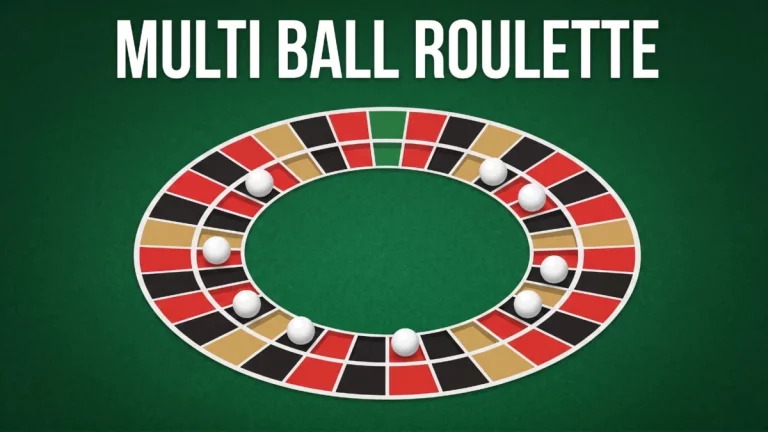
Multi-Ball Roulette: Roulette With Up To Ten Balls
Roulette is all about predicting where the ball lands. Jump to section The Two Phases of Standard Craps Pass Line and Don't Pass Rules…
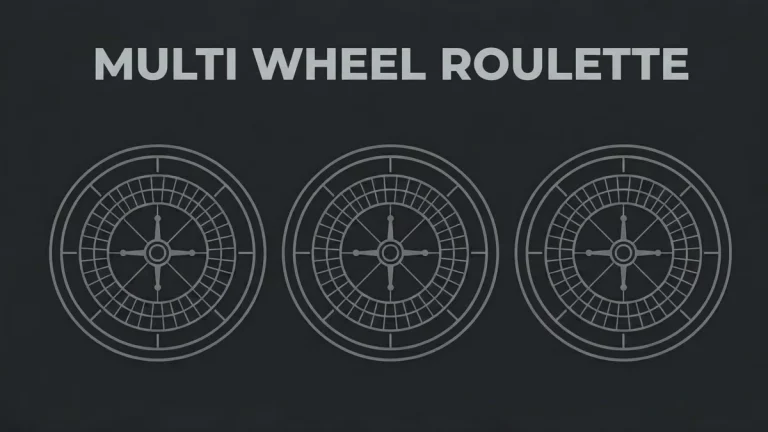
Multi-Wheel Roulette: Roulette With More Than One Wheel
A spinning wheel is essential to the iconic, unpredictable roulette game, and usually there’s only one of them. Jump to section The Two Phases…

Your Ultimate Guide to Sweepstakes Coins
Sweepstakes Coins are the heart of the social casino experience, blending the thrill of casino gaming with the excitement of winning real prizes. This…