

Last modified on:
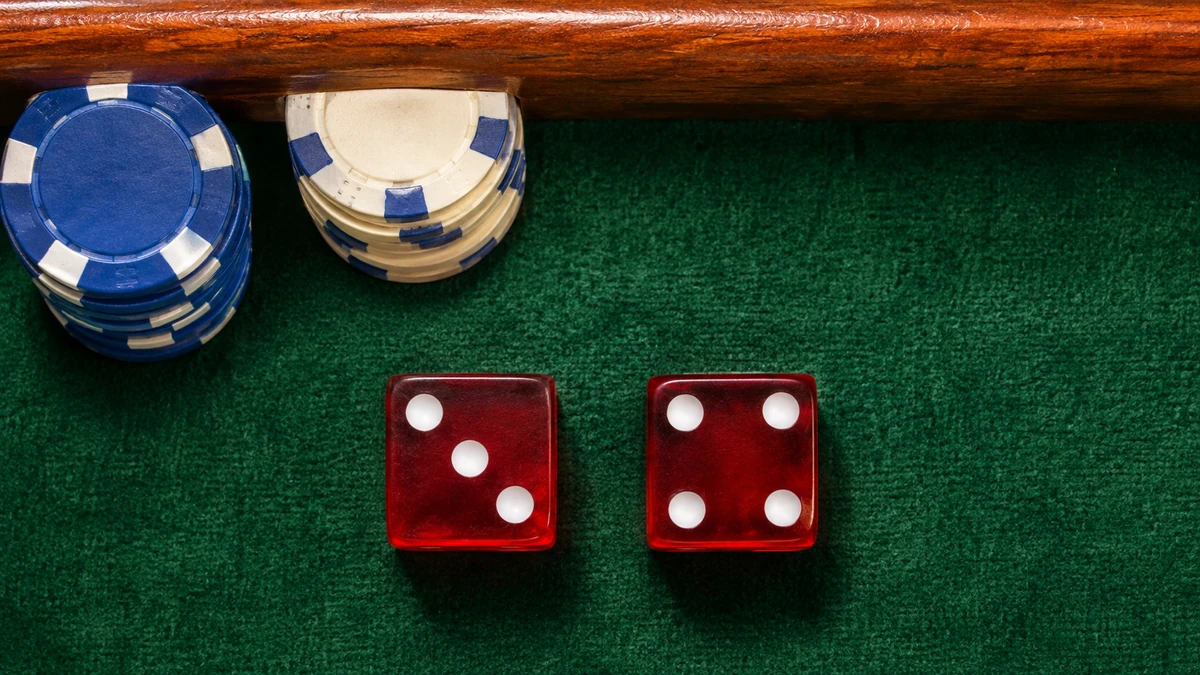
Craps is a dice game built around the total of two dice. In standard craps, a Pass Line play wins on a come-out roll of 7 or 11 and loses on 2, 3 or 12. A 4, 5, 6, 8, 9 or 10 becomes the point, which must repeat before a 7 for that play to win.
Jump to section
That opening sequence is the starting point for understanding the table. This guide explains the essentials, then connects you with focused chapters on the rules, gameplay, table layout, strategy, tips, odds, rewards and different formats.
Chapter 1: Craps Rules
A standard Pass Line decision has two possible stages: the come-out roll and, if a point is established, the point phase. Once that point is active, a 7 ends the Pass Line play with a loss. Other totals keep that decision running unless the point repeats.
Different areas of the table follow different rules. Don’t Pass reverses much of the Pass Line sequence, but a come-out 12 commonly produces a push rather than a win. Come plays establish their own points, while the Field resolves on the next roll.
Start with the complete rules, then use the individual explainers when you need a particular option:
- Pass Line and Don’t Pass: Compare their opening results and point-phase outcomes.
- Come and Don’t Come: Understand why an individual Come point can differ from the table point.
- The Field: Check its winning totals and the special treatment of 2 and 12.
- Place options: Follow a chosen number until it appears or a 7 ends the active play.
Chapter 2: How to Play Craps
To follow your first game, concentrate on one Pass Line decision. Identify the come-out stage, choose your play before the roll, and watch whether the dice settle it immediately or establish a point.
For example, suppose the come-out total is 6. That makes 6 the point. A following 9 leaves the Pass Line decision open; a following 6 completes it with a win. If a 7 arrives before the second 6, that decision loses instead.
The practical walkthrough covers the order of actions and how to track a round. Keep it alongside the rules chapter if you want to connect each action with its result.
Chapter 3: Craps Table Layout
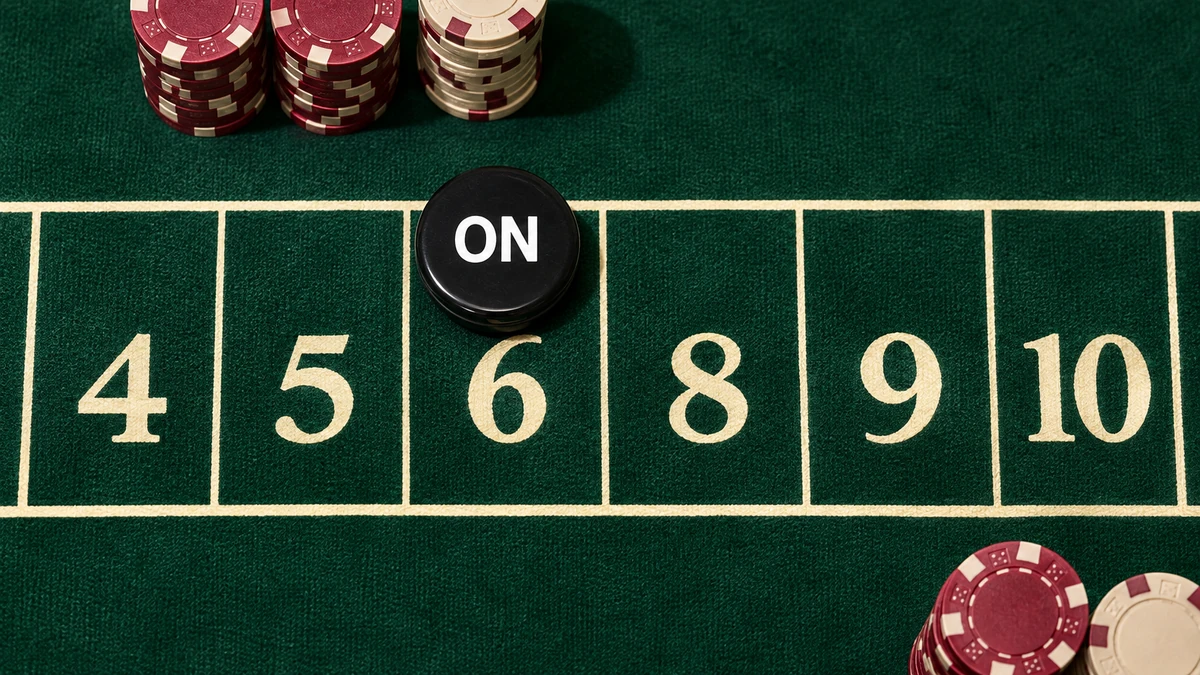
A craps layout groups playing options into named areas. The Pass Line runs around the outside, the Come area sits farther inside, and the numbered boxes identify 4, 5, 6, 8, 9 and 10. A point marker commonly shows which number is active.
Read a layout by finding the point first, then locating the option you want to understand. A chip beside a number does not mean every play attached to that number has the same rules or reward ratio.
Chapter 4: Craps Strategy
Craps strategy means comparing playing options, reward ratios and the amount you commit. It cannot control the dice. A pattern in previous rolls does not change the probabilities of the next independent roll.
Under standard rules, the Pass Line has a house edge of about 1.41%. That is a long-run mathematical average measured against the amount initially committed, not a prediction of any particular session. The strategy chapter compares options using consistent assumptions and explains why increasing your play after losses does not remove a house edge.
Chapter 5: Craps Tips
Useful craps tips help you avoid preventable mistakes while following the game. Before a roll, check the point, the playing option you selected, and whether it remains active. Distinguish a one-roll option from a decision that may continue for several rolls.
Set your time and play limits before starting, and take a break when following the table becomes difficult. At a physical table, keep your hands clear once the dice are moving. On a screen, confirm selections before the entry window closes rather than rushing to add another option.
Chapter 6: Craps Odds
Two fair six-sided dice have 36 equally likely ordered results. Their totals are not equally likely: six combinations make 7, while only one makes 2.
| Total | Combinations out of 36 | Chance on one roll |
|---|---|---|
| 2 or 12, individually | 1 | 2.78% |
| 3 or 11, individually | 2 | 5.56% |
| 4 or 10, individually | 3 | 8.33% |
| 5 or 9, individually | 4 | 11.11% |
| 6 or 8, individually | 5 | 13.89% |
| 7 | 6 | 16.67% |
Those are single-roll probabilities. The chance of completing a point before 7 is a different calculation because other totals can leave the decision unresolved. The odds chapter separates these probabilities from reward ratios and the additional playing option also called Odds.
Chapter 7: Craps Rewards
A reward ratio tells you how a successful play is calculated. It does not tell you how likely that success is. With a standard 1:1 net reward, a winning 5-unit Pass Line play earns 5 units, with the original 5 also returned, for a total of 10.
Always distinguish a net reward from a total that includes the original amount. Also check the exact configuration: special Field rewards can differ between games, so one chart should not be treated as universal.
Chapter 8: Craps Variations
Separate changes to the rules from changes to how the dice are presented. Standard craps can appear at a physical table, on an automated machine, or in a digital format. Crapless craps changes the opening rules: 2, 3, 11 and 12 become possible points rather than their standard Pass Line outcomes.
Removing the immediate opening loss on 2, 3 and 12 does not make the whole game more favorable. Those totals can be difficult points to repeat before 7, and the change to 11 also matters.
- Bubble craps: Learn how an enclosed physical dice apparatus changes the presentation.
- Crapless craps: Compare the additional point numbers and their effect on the game.

Chapter 9: Live Craps
Live craps brings a real-time physical dice result to your screen. The format may use a dealer-led table or automated equipment, so the word live does not by itself establish that a person throws the dice or hosts the game.
McLuck’s craps collection includes Bubble Craps and Bubble Crapless Craps. Our introduction to the two bubble craps games covers their arrival, while the live guide explains the format distinctions to look for.
Chapter 10: Quick FAQs
How many dice are used in craps?
Craps uses two six-sided dice. Their combined total determines the result of each roll.
Is craps entirely a game of chance?
The dice results are chance-based, and playing decisions cannot make a particular total appear. Your choice of playing options can still change the house edge, the size of possible rewards and how much you commit.
More Casino Game Guides
Explore Craps at McLuck
Start with the come-out roll and keep track of the point as the round develops. Explore Bubble Craps and Bubble Crapless Craps at McLuck to put the basics into practice.
More Casino Guides
Craps Rules: Come-Out Rolls, Points and Results
Standard craps rules depend on the stage of play. On a Pass Line come-out roll, 7 or 11 wins, 2, 3 or 12 loses,…
Understanding RTP in Slots
If you’re new to online slots, you’ve likely come across the term RTP or Return to Player. In this guide, we’ll unravel the mystery…

The Ultimate Guide to Social Casinos
Social casinos have quickly become one of the most popular ways to enjoy casino-style gaming online. Unlike traditional online casinos, social casinos focus on…
Multi-Ball Roulette: Roulette With Up To Ten Balls
Roulette is all about predicting where the ball lands. Jump to section Chapter 1: Craps Rules Chapter 2: How to Play Craps Chapter 3:…
Multi-Wheel Roulette: Roulette With More Than One Wheel
A spinning wheel is essential to the iconic, unpredictable roulette game, and usually there’s only one of them. Jump to section Chapter 1: Craps…

Your Ultimate Guide to Sweepstakes Coins
Sweepstakes Coins are the heart of the social casino experience, blending the thrill of casino gaming with the excitement of winning real prizes. This…